
Mid-symposium excursions (22 July 2025)
Please note that excursions 1, 2, 5, 7, 8 and 9 will, in part, visit the same sites as the four-day pre-symposium excursion. If you also register for the four-day pre-symposium excursion, please select one of the excursions 3, 4, 6, 10 or 11. Excursions 9 and 5 are also identical to the one-day pre-symposium excursions on 18 and 19 July, respectively.
The price of the mid-symposium bus excursions is included in the Symposium fee. All the excursions depart on Wednesday 22 July at 8:00 from Hotel Voroněž I, except Excursion 10 (Hrubý JesenÃk Mountains) which departs at 7:00. The expected return of the excursions to Brno is between 17:00 and 19:00.
Excursion 1: ŽÄár Hills (ŽÄárské vrchy - bogs, fens, meadows and beech forests)
 Guides: Michal Hájek, Tomáš Peterka & Kamila JuÅ™iÄková
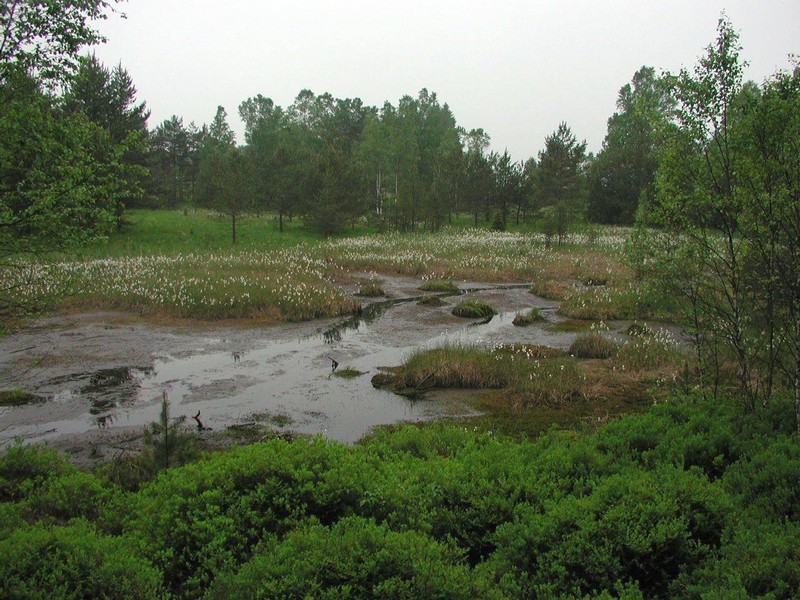
The ŽÄár hills on the border between the historical lands of Bohemia and Moravia are characterised by frequent occurrence of (semi-)natural habitats, in particular wet meadows and mires.
We will visit (i) the Dářko National Nature Reserve with the Padrtiny bog, an ombrotrophic mire with the Central European endemic Pinus uncinata subsp. uliginosa, (ii) the primeval beech forest on
Žákova hora hill, (iii) the Louky u ÄŒerného lesa site with fens and fen meadows and the nearby Baroque–Gothic Pilgrimage Church of St. John of Nepomuk at Zelená hora near ŽÄár nad Sázavou (UNESCO World Heritage Site).
Visited sites: Dářko bog (4 km walk) – Žákova hora beech forest (3 km walk) – Louky u Černého lesa fens near Zelená hora church (2.5 km walk)
The Dářko and Louky u Černého lesa sites will also be visited during the four-day pre-symposium excursion. Do not register for this excursion if you also register for the four-day pre-symposium excursion!
Plants of the Dářko National Nature Reserve – Padrtiny bog
Plants of the Dářko National Nature Reserve – mires and grasslands between the Padrtiny bog and the hill RadostÃnský kopec
Plants of the Žákova hora National Nature Reserve
Plants of the Louky u Černého lesa Nature Monument
Excursion 2: Mohelno Serpentinite Steppe and Krumlov-Rokytná Conglomerates (serpentinite steppe, forests, rock-outcrop grasslands)
 Guides: David Zelený, Pavel Daněk & Pavel Novák
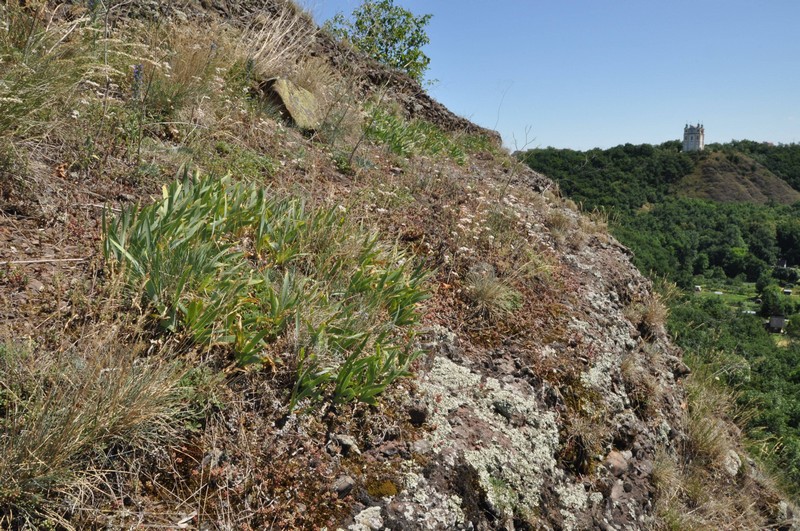
South-western Moravia is characterised by deep river valleys in the granitic, metamorphic and sedimentary rocks of the Bohemian Massif. We will visit the Mohelno Serpentinite Steppe on rocky slopes above the Jihlava river. We will then move to the Krumlov Wood with extensive deciduous forests on various bedrocks (granitoids, limestone, loess). The third stop on our trip will be the Rokytná river valley near Moravský Krumlov with both acidophilous and basiphilous dry grasslands and rock-outcrop vegetation on Permian conglomerate. We will finish our trip in the historical town of Moravský Krumlov.
Visited sites: Mohelno serpentinite Steppe (2.5 km walk) – Krumlov Wood (2 km walk) – Krumlov-Rokytná Conglomerates in the Rokytná river valley near the town of Moravský Krumlov (4.5 km walk) – Moravský Krumlov
Mohelno Serpentinite Steppe will also be visited during the four-day pre-symposium excursion. Do not register for this excursion if you also register for the four-day pre-symposium excursion!
Plants of the Mohelno Serpentinite Steppe – dry grasslands and rock outcrops
Plants of the Mohelno Serpentinite Steppe – forests
Plants of Krumlov Wood
Plant of the Krumlov-Rokytná Conglomerates
Excursion 3: Moravian Karst – North (deciduous forests, limestone grasslands)
 Guide: Zdeňka Lososová
The Moravian Karst is a 25 km long strip of limestone dissected by deep valleys into a number of plateaux. There are more than 1100 caves, dolines and gorges, mostly in its central and northern part.
Various types of natural deciduous forests (mainly beech, oak-hornbeam and ravine forests, but also dry oak forests) are well developed in the valleys of the northern part of the Moravian Karst.
Small patches of dry grasslands with Stipa are found at the upper edges of the valleys, but more extensive secondary dry grasslands also occur on deforested limestone slopes. We will also visit the spectacular 138 m deep Macocha abyss.
Visited sites: Josefov Valley near Křtiny (3 km walk) – dry grasslands near Vilémovice (short walk) – the Macocha abyss and Pustý Žleb valley (4 km walk)
Plants of the Josefov Valley
Plants of the Macocha abyss and the nearby karst valleys
Excursion 4: Moravian Karst – South (dry grasslands, deciduous forests, quarry restoration, grassland management)
 Guide: LubomÃr Tichý
The southern part of the Moravian Karst borders the Pannonian forest-steppe region and many thermophilous species occur there at the northern or eastern limit of their distribution. We will start on Hády Hill at the edge of the city of Brno to see dry grasslands and forest-steppe vegetation both in semi-natural habitats and in an abandoned limestone quarry with both spontaneous and managed succession. We will demonstrate the activities of the Hády Land Trust, an NGO which provides alternatives to state nature protection including grassland management using various types of grazing. At the next stop, we will walk through the karst valley of the ŘÃÄka creek with oak-hornbeam and ravine forests, caves, screes and karst springs. The final stop will be near the BýÄà skála (“Bull Rockâ€) cave in the central part of the Moravian Karst with oak-hornbeam and beech forests.
Visited sites: Hády Hill (2 km walk) – ŘÃÄka valley (6 km walk) – Josefov Valley near KÅ™tiny (2 km walk)
Note for participants in the European Conference on Ecological Restoration in 2012: Hády Hill was visited after the ECER Conference.
Plants of Hády Hill
Plants of the ŘÃÄka Valley
Plants of the Josefov Valley
Excursion 5: Podyjà National Park (dry grasslands and heathlands, deciduous forests)
 Guide: Milan Chytrý
The Podyjà National Park is part of the bilateral Czech–Austrian PodyjÃ/Thayatal National Park. It includes a deep forested valley of the Dyje (Thaya) river meandering in the granitic and metamorphic
rocks of the Bohemian Massif. We will visit acidophilous dry grasslands and dry Calluna heathlands in the south-eastern part of the Park (HavranÃky-Znojmo heathlands), the Dyje river valley with a range of different types
of deciduous forests, and the Å obes meander with ancient vineyard, and will finish our trip in the picturesque city of Znojmo with examples of Gothic architecture and a Romanesque rotunda.
Visited sites: dry grasslands near HavranÃky – Dyje river valley – Å obes vineyard – Hnanice (7 km walk) and Konice – dry heathlands on Kravà hora hill – Znojmo (3.5 km walk)
The sites on this excursion will also be visited during the four-day pre-symposium excursion and during the one-day pre-symposium excursion on 19 July. Do not register for this excursion if you also register for one of the pre-symposium excursions!
Note for participants in the European Vegetation Survey excursion to the Podyjà National Park in 2008: This excursion will go to a different part of the park with different habitats than those visited in 2008.
Plants of the HavranÃky-Znojmo heathlands
Plants of the Å obes meander
Excursion 6: Pavlov Hills and Pouzdřany Steppe (continental steppe, deciduous forests)
 Guides: Radim Hédl & Péter Szabó
This excursion will take us to two remarkable sites south of Brno: DÄ›vÃn hill in the Pavlov Hills and PouzdÅ™any Steppe. PouzdÅ™any is a flysch and loess hillock with continental steppic grassland
of Stipa and Festuca with Crambe tataria. DÄ›vÃn (“Maiden Hillâ€) is a limestone elevation of 550 m, a dominant feature visible from afar in the relatively flat landscape on the north-western edge of the Pannonian forest-steppe region. It is part of the Dolnà Morava UNESCO Biosphere Reserve. It attracted the attention of humans as early as 30,000 years ago, when hunter-gatherers of the Gravettian culture established settlements on the DÄ›vÃn foothills. DÄ›vÃn is mostly forested with thermophilous oak, oak-hornbeam and ravine forests which were coppiced for many centuries. Beech and conifers are naturally missing. The steep south-facing slopes of DÄ›vÃn are covered with dry grasslands with many species of continental or submediterranean distribution which reach the western or northern limit of their distribution here.
Visited sites: Pouzdřany Steppe and Kolby Wood (3 km walk) – Pavlov Hills (5 km walk) – the historical town of Mikulov
Note for participants in the European Vegetation Survey excursion in 2008: This excursion will visit the same sites as the EVS 2008 excursion.
Plants of the Pouzdřany Steppe
Plant of Kolby Wood
Plants of the Pavlov Hills
Excursion 7: Lednice–Valtice Cultural Landscape, a UNESCO World Heritage Site (Romantic landscape park, alluvial grasslands and forests)
 Guide: Jiřà Danihelka
The Lednice–Valtice Cultural Landscape, one of the twelve World Heritage Sites in the Czech Republic, is situated in the south-east of the country near the border with Austria. With an area of 283 km2, it is probably one of the largest landscape parks in the world. It was established at the end of the eighteenth century by the local lords of the House of Liechtenstein. The area is famous for masterful integration of various architectonical structures, including Valtice and Lednice chateaux, and natural elements of the lowland and hilly landscape. One or two sites with continental floodplain meadows may be visited on the floodplain of the Dyje river near Lednice chateau park, though the final choice will depend on the time of mowing. After visiting the landscape park and the Dyje floodplain, we will move to the village of Milovice to explore dry grasslands and thermophilous oak and oak-hornbeam forests on calcareous substrates.
Visited sites: Lednice Chateau Park (3 km walk; the Neo-Gothic chateau will not be visited!) –
Milovická stráň Nature Reserve near Milovice (short walk)
Lednice Chateau Park will also be visited during the four-day pre-symposium excursion. Do not register for this excursion if you also register for the four-day pre-symposium excursion!
Plants of the Lednice Chateau Park
Plants of the Milovická stráň Nature Reserve
Excursion 8: HodonÃnská Dúbrava Wood and Å pidláky Nature Reserve (sub-continental oak forest and dry grasslands)
 Guide: Jan RoleÄek
HodonÃnská Dúbrava Wood protects the best-preserved remnant of sub-continental oak forest on sand in the Czech Republic. It occupies a low plateau above the Morava river floodplain covered by wind-blown
sands forming a mildly undulating topography. Large areas of open-canopy dry-mesic oak forests with a herb layer rich in Pannonian forest-steppe species form the matrix vegetation, interspersed with shady
oak-lime stands, forestry plantations and moist depressions with relic wetland plants. We will take a walk through the forest and visit all major habitats. We will then pay a short visit to the adjacent
MutÄ›nické rybnÃky fishponds – a characteristic man-made wetland type of the Czech landscape. We will then move to the village of ÄŒejÄ and explore the Å pidláky Nature Reserve. This protected area
features species-rich dry grasslands growing on slopes of small hills surrounding the vanished ÄŒejÄ Lake – another precious relict of the Pannonian forest-steppe.
Visited sites: HodonÃnská Dúbrava near HodonÃn (5 km walk) – MutÄ›nické rybnÃky fishponds near MutÄ›nice – Å pidláky dry grasslands between ÄŒejÄ and ÄŒejkovice (4 km walk)
The HodonÃnská Dúbrava site will also be visited during the four-day pre-symposium excursion. Do not register for this excursion if you also register for the pre-symposium excursion!
Plants of HodonÃnská Dúbrava Wood
Plants of the Špidláky Nature Reserve
Excursion 9: The White Carpathians (extremely species-rich semi-dry meadows)
 Guides: Ivana Jongepierová & Jan Wim Jongepier
The White Carpathian Mountains (in Czech: BÃlé Karpaty) is a UNESCO Biosphere Reserve located near the Czech–Slovak border. It is famous for extensive areas of semi-dry meadows with scattered trees that are rich in orchids and were recently identified as one of the species-richest plant communities in the world at plot sizes between 0.004 and 49 square metres. We will visit the record-holding site of ÄŒertoryje where we will take a longer walk to experience the large extent of the meadows. Many meadows will have already been cut in July, but we will see some uncut areas. We will then visit the Zahrady pod Hájem site with dry grasslands, rare weed species of arable land, and orchards with traditional local varieties of fruit trees.
Visited sites: ÄŒertoryje meadows (6 km walk from LuÄina to Malá Vrbka) – Zahrady pod Hájem near Velká nad VeliÄkou (short walk)
The sites on this excursion will also be visited during the four-day pre-symposium excursion and during the one-day pre-symposium excursion on 18 July. Do not register for this excursion if you also register for one of these pre-symposium excursions!
Note for participants in the European Conference on Ecological Restoration in 2012: The sites on this excursion were visited after the ECER Conference.
Plants of the Čertoryje and Zahrady pod Hájem meadows
Plants of the Čertoryje and Zahrady pod Hájem meadows – spring fen species
Plants of the Čertoryje and Zahrady pod Hájem meadows – arable weeds
Excursion 10: Hrubý JesenÃk Mountains (alpine and subalpine vegetation)
 Guides: Martin KoÄÃ, KateÅ™ina KoÄà & JindÅ™ich Chlapek
Important note: This excursion will visit steep rocky slopes off the trails in a mountain terrain. It is suitable only for experienced and fit mountain hikers with hiking boots. It is the only excursion that starts earlier (7:00 a.m.) as it includes a longer bus drive.
The Hrubý JesenÃk Mountains in northern Moravia are the second highest mountain group of the Sudetes (1492 m) with alpine areas above the timberline. We will visit the treeless summit area at altitudes of 1300–1450 m and subalpine vegetation on avalanche tracks in the Velká kotlina glacial cirque, a site with the species-richest flora in the Sudetes.
Visited sites: OvÄárna Hut – summit bog near Barborka Hut – Petrovy kameny cliff – Vysoká hole Mt. – Velká kotlina cirque – Karlov (9 km walk)
Plants of the summit area of the Hrubý JesenÃk Mountains and the Velká kotlina cirque
Excursion 11: Brno sightseeing
 Guides: Magdaléna Chytrá and a professional tourist guide
This excursion will visit the historical city centre, the Botanical Garden of the Faculty of Science, Masaryk University, and Masaryk University’s Mendel Museum.